
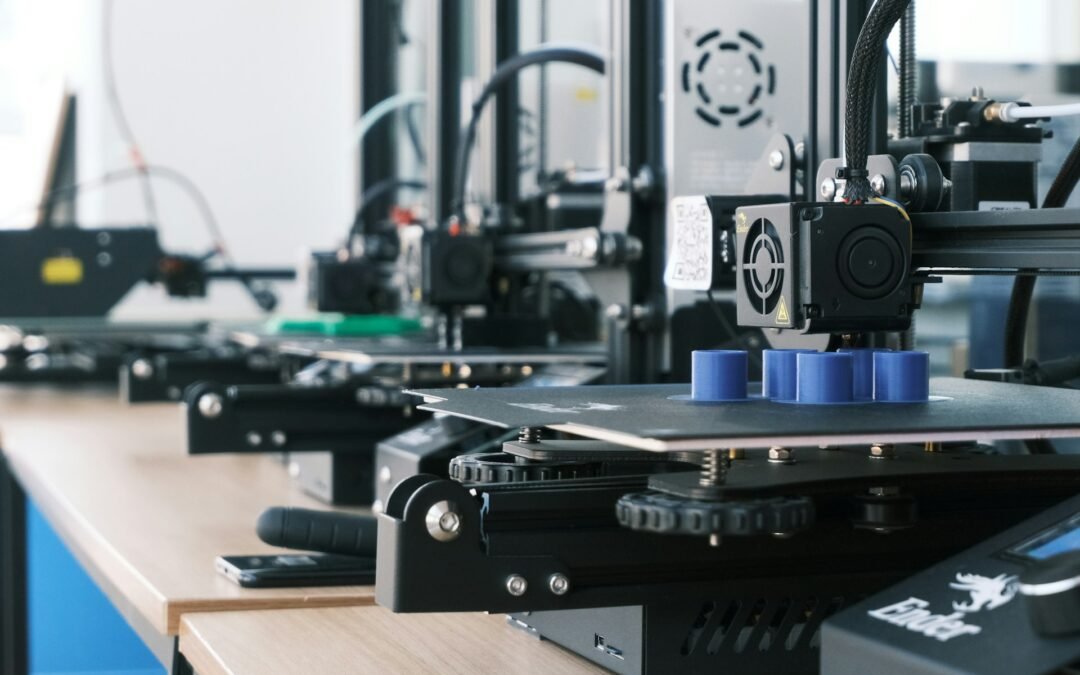
The manufacturing industry is undergoing a profound transformation driven by a new wave of 3D printing innovations that are redefining how products are designed, prototyped, and produced. What was once considered a niche technology reserved for hobbyists and small-scale prototyping has evolved into a cornerstone of industrial manufacturing. Today, additive manufacturing technologies are enabling companies across aerospace, healthcare, automotive, and consumer goods sectors to push the boundaries of what is physically possible. From printing complex geometries that traditional machining cannot achieve to drastically reducing material waste and production lead times, the latest advancements in 3D printing are setting a new standard for modern manufacturing excellence. This article explores the most significant innovations shaping the future of the industry.

Breakthrough Materials Expanding Manufacturing Possibilities

One of the most impactful areas of recent 3D printing innovations lies in the development of advanced materials. Manufacturers are no longer limited to basic plastics and resins. The latest generation of printable materials includes:

  • High-performance polymers: Materials such as PEEK (Polyether ether ketone) and ULTEM are now widely used in aerospace and medical applications due to their exceptional strength-to-weight ratios and heat resistance.
  • Metal alloys: Titanium, stainless steel, Inconel, and aluminum alloys can now be printed with remarkable precision using technologies such as Direct Metal Laser Sintering (DMLS) and Selective Laser Melting (SLM).
  • Composite materials: Carbon fiber-reinforced filaments and continuous fiber composites are enabling the production of lightweight yet incredibly strong structural components.
  • Bio-compatible materials: The medical sector has benefited enormously from the development of biocompatible and even biodegradable materials suitable for implants, prosthetics, and surgical models.
  • Smart and conductive materials: Electrically conductive filaments and shape-memory polymers are opening up new possibilities in electronics manufacturing and soft robotics.

These material advancements are not merely incremental improvements they represent a fundamental expansion of the applications where additive manufacturing can serve as a viable and superior alternative to traditional production methods.

Multi-Material and Multi-Process Printing Technologies

Another pivotal development in contemporary 3D printing innovations is the emergence of multi-material printing systems. These advanced platforms allow manufacturers to print objects using two or more materials simultaneously within a single build cycle. This capability enables the creation of components with varying mechanical properties, textures, and functional characteristics all within one seamless production process.

Companies such as Stratasys, Desktop Metal, and Carbon have pioneered systems that combine rigid and flexible materials in a single print job, making it possible to produce functional assemblies that previously required multiple manufacturing steps and post-assembly work. Furthermore, hybrid manufacturing systems which integrate both additive and subtractive processes are gaining significant traction. These machines can 3D print a component and then machine it to precise tolerances within the same workflow, delivering both design freedom and dimensional accuracy.

Accelerated Printing Speeds Through Next-Generation Technologies

Speed has historically been one of the primary limitations of 3D printing in a commercial manufacturing context. However, recent 3D printing innovations have dramatically addressed this constraint. Several breakthrough technologies are now delivering production speeds that rival, and in some cases surpass, conventional manufacturing methods:

  • Continuous Liquid Interface Production (CLIP): Developed by Carbon, this technology uses a photochemical process rather than a layer-by-layer approach, producing parts up to 100 times faster than traditional Stereolithography (SLA).
  • High-Speed Sintering (HSS): Utilizing inkjet technology to apply heat-absorbing ink before fusing polymer powder with infrared light, HSS significantly accelerates the production of end-use parts.
  • Binder Jetting: This method, employed by companies like HP and Ex One, deposits a binding agent onto powder layers at extremely high speeds, making it ideal for large batch production.
  • Multi Jet Fusion (MJF): HP’s proprietary technology simultaneously fuses multiple points across each layer, dramatically reducing build times while delivering consistent mechanical properties.

These technological advancements are making it increasingly feasible for manufacturers to integrate 3D printing directly into high-volume production lines, rather than confining it solely to prototyping and low-volume manufacturing.

3D Printing in the Aerospace and Defense Sector

The aerospace and defense industry has emerged as one of the leading adopters of cutting-edge 3D printing innovations. The ability to produce lightweight, complex components with minimal material waste aligns perfectly with the stringent performance and cost requirements of this sector.

Leading aerospace manufacturers, including Boeing, Airbus, and GE Aviation, have integrated additive manufacturing into their production pipelines for components ranging from fuel nozzles and turbine blades to interior cabin panels and structural brackets. GE Aviation’s 3D-printed fuel nozzle for the LEAP engine, for example, is 25% lighter and five times more durable than its traditionally manufactured counterpart a testament to the transformative potential of additive manufacturing.

The defense sector is also leveraging 3D printing for on-demand spare parts production, reducing supply chain dependencies and enabling rapid field repairs in remote locations. The ability to digitally store and print parts as needed represents a paradigm shift in military logistics and maintenance operations.

Revolutionizing Healthcare Through Bioprinting and Medical Manufacturing

Perhaps no industry has been more profoundly impacted by recent 3D printing innovations than healthcare. Bioprinting the process of printing with living cells and biological materials is advancing at a remarkable pace, with researchers making significant progress toward printing functional human tissues and organs.

Beyond organ research, healthcare providers are already utilizing 3D printing innovations to manufacture highly customized medical solutions tailored to individual patients. Custom prosthetics, dental implants, hearing aids, orthopedic devices, and patient-specific surgical guides are becoming increasingly common due to the precision and personalization offered by additive manufacturing.

Hospitals and surgical teams are also using 3D-printed anatomical models to prepare for complex procedures. These models allow surgeons to visualize patient anatomy in extraordinary detail before entering the operating room, significantly improving surgical planning and reducing procedural risks.

Additionally, pharmaceutical companies are exploring 3D printing technologies to create personalized medications with customized dosages and controlled-release properties. This advancement has the potential to transform precision medicine and patient-specific treatment strategies.

Sustainability and Environmental Benefits of 3D Printing Innovations

Sustainability has become a major priority across global manufacturing industries, and 3D printing innovations are contributing significantly to environmentally responsible production practices. Traditional subtractive manufacturing methods often generate substantial material waste, as excess material is cut away during production. In contrast, additive manufacturing builds objects layer by layer, using only the material necessary to create the final product.

Several sustainability advantages include:

  • Reduced material waste through precise additive processes
  • Lower transportation emissions due to localized manufacturing
  • Decreased inventory requirements through on-demand production
  • Extended product lifecycles via rapid spare-part manufacturing
  • Recyclable and biodegradable printing materials

Companies are also investing heavily in closed-loop recycling systems that convert used plastic products into new printable filament, further supporting circular manufacturing initiatives.

Artificial Intelligence and Automation in Additive Manufacturing

Artificial intelligence is increasingly intersecting with modern 3D printing innovations, creating smarter and more autonomous manufacturing systems. AI-driven software can now optimize part geometries, automatically detect print defects, and improve print quality through real-time monitoring and machine learning algorithms.

Generative design tools powered by artificial intelligence enable engineers to input performance goals and manufacturing constraints while the software autonomously generates optimized component designs that maximize strength while minimizing weight and material usage. These highly organic structures are often impossible to create using traditional manufacturing methods but perfectly suited for additive production.

Automation is also streamlining the post-processing phase of 3D printing. Robotic systems can now handle tasks such as part removal, support structure cleaning, surface finishing, and quality inspection, significantly improving manufacturing scalability and consistency.

The Rise of Distributed and On-Demand Manufacturing

One of the most disruptive aspects of current 3D printing innovations is the emergence of distributed manufacturing models. Instead of relying on centralized factories and complex global supply chains, businesses can now produce components closer to the point of use through localized additive manufacturing hubs.

This decentralized production model offers several strategic advantages:

  • Faster product delivery times
  • Reduced logistics costs
  • Improved supply chain resilience
  • Lower warehousing requirements
  • Greater customization capabilities

The COVID-19 pandemic highlighted the vulnerabilities of global supply chains, accelerating interest in additive manufacturing as a flexible and responsive production alternative. Many organizations now view 3D printing not only as a manufacturing technology but also as a strategic supply chain solution.

Challenges Still Facing the 3D Printing Industry

Despite the remarkable progress made through recent 3D printing innovations, several challenges still limit broader adoption across all manufacturing sectors.

Key obstacles include:

  • High industrial equipment costs
  • Limited scalability for certain mass-production applications
  • Post-processing requirements
  • Material certification and regulatory compliance
  • Print consistency and repeatability concerns
  • Skilled workforce shortages

While these limitations are gradually being addressed through ongoing research and development, they remain important considerations for manufacturers evaluating large-scale additive manufacturing investments.

The Future of 3D Printing Innovations

The future of 3D printing innovations appears exceptionally promising as advancements continue to accelerate across hardware, software, materials science, and automation technologies. Industry analysts predict that additive manufacturing will become increasingly integrated into mainstream production environments over the next decade.

Emerging trends expected to shape the future include:

  • Large-scale construction 3D printing for homes and infrastructure
  • Fully functional bio-printed organs for transplantation
  • 4D printing with self-transforming materials
  • Space-based additive manufacturing for lunar and Mars missions
  • AI-driven autonomous print factories
  • Mass customization at industrial scale

As technology matures, additive manufacturing will likely move beyond being merely an alternative production method and become a core pillar of next-generation manufacturing ecosystems.

Conclusion

The rapid advancement of 3D printing innovations is fundamentally reshaping the future of manufacturing across virtually every major industry. From aerospace and healthcare to automotive, construction, and consumer products, additive manufacturing technologies are unlocking new levels of efficiency, customization, sustainability, and design freedom.

While challenges remain, the pace of innovation continues to accelerate, driven by breakthroughs in materials, printing speed, automation, and artificial intelligence. Companies that strategically embrace these technologies today are positioning themselves to lead the next era of industrial transformation. As global industries continue to evolve toward smarter, faster, and more sustainable production models, 3D printing innovations will undoubtedly play a central role in defining the future of manufacturing.

Photo by Minku Kang on Unsplash